
UX research methods
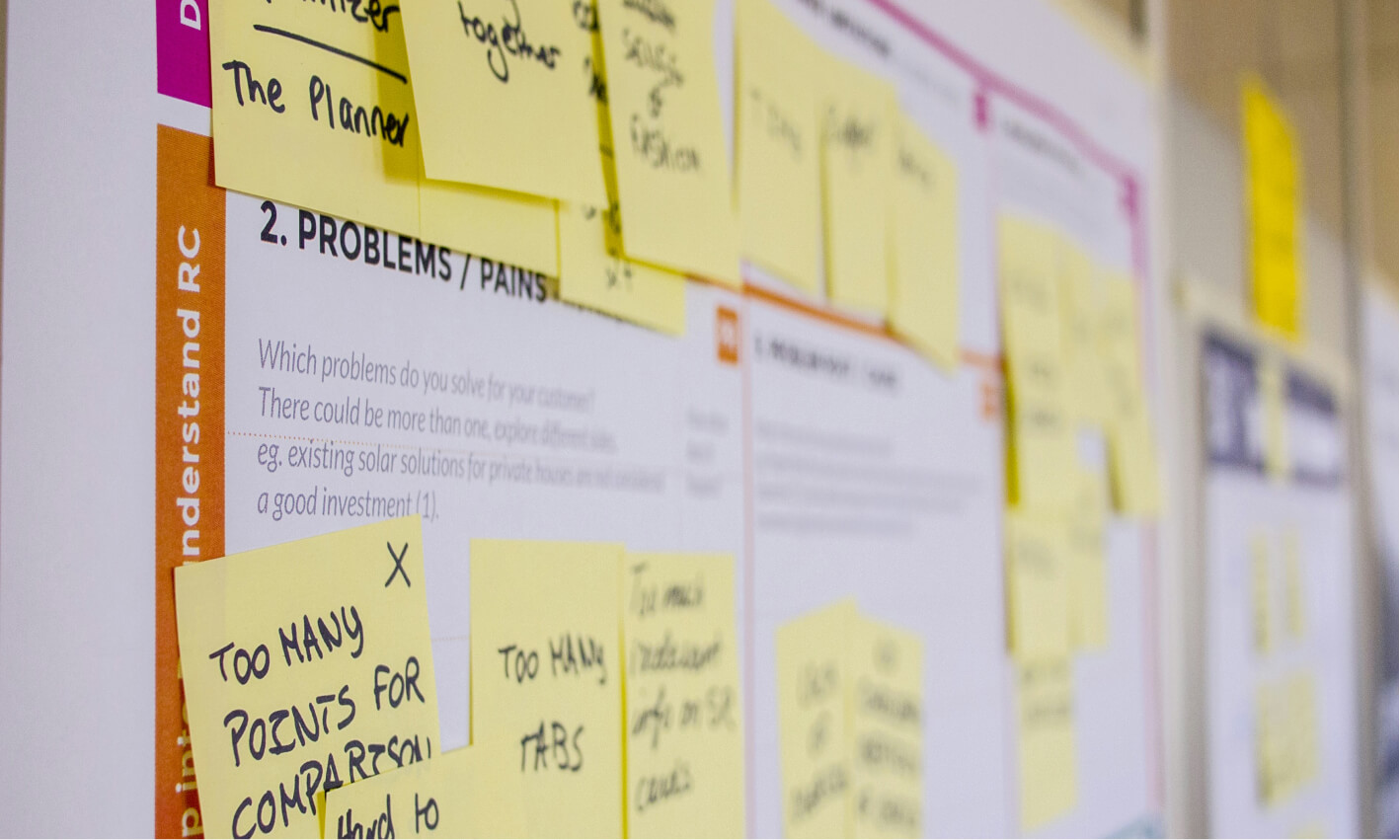
If you’ve spent any time in UX, you’ve heard the usual research methods: user interviews, surveys, journey maps, card sorting, empathy maps, etc. These are the methods that get mentioned in UX training, dropped into project proposals, and talked about in articles – but knowing the methods isn’t the same as knowing how to use them, and more importantly, when to ditch them entirely.
In this guide I’ll break down the most common UX research methods by what they actually deliver, and include some tips on choosing the right methods, and how to think more creatively about designing a research plan that fits your specific problem.
Common UX research methods (and when to use them)
For gathering data and thinking collaboratively
You don’t have a fully formed problem yet – you’re gathering insights and data to understand where the problems are.
Common methods
- User interviews
- Stakeholder and SME workshops
- Audits and Analysis (Competitive, Accessibility, UX, SEO/GEO, and/or Technical)
- Card Sorting
- Top Task Workshops
For interpreting and sorting data so it can be used
You’ve done the upfront work to gather what you need and have some great insights to act on. Now it needs to be interpreted and put into a presentable format so you and your team can action the findings.
Common methods:
- User journey flows and maps
- Empathy maps
- User personas
For testing assumptions and hypotheses
You created something that you think is going to solve the user problems, now you want to validate it before getting it in the market.
Common methods:
- Prototype testing
- Tree testing
- First-click testing
For measuring success and planning future improvements
Your new solution is out there in the world, now you want to make sure it solved the original issue and is providing optimal value.
Common methods:
- Feedback surveys
- Bug and support monitoring
- Analytics
Avoid research overload and ‘UX soup’
This is the part that doesn’t get said enough. Following a method and not asking the right questions isn’t going to get you anywhere.
Take user personas as an example. If you’ve been through the process of creating them, let me ask, where are they now? More than likely they’ve been forgotten and ignored. That’s because they weren’t built to be used. No one knew what to do with them, so they got lost in a UX soup.
The best research is designed around a specific problem. Sometimes that means combining methods in unconventional ways. Sometimes it means creating something new entirely because nothing off the shelf quite fits what you need to learn.
A few principles to guide a successful research plan:
1. Design your research with a goal
Before choosing your research methods, ask ‘How will this research actually be used?’ (and don’t just leave it at ‘validation’… think about it realistically and specifically).
2. Understand the methods
Knowing how a method has worked for others helps you know when to modify, and when to walk away from it.
3. Be honest about uncertainty
There will be projects where you’re not entirely sure what you need to learn, let alone how to learn it. Setting that expectation clearly is more valuable than projecting false confidence. Good research partners work through uncertainty together.
Recently, a research engagement I worked on was expected to produce KPIs, which isn’t the typical outcome of qualitative interviews. I was upfront about the uncertainty in what the research would deliver, and designed the process with that goal in mind as much as possible. When one of the intended metrics turned out not to be measurable, we were all aware that might happen and had backup options for metrics. Research involves a lot of trial and error, navigating that confidently helps build trust.
4. Know that the artefact is not the goal
A journey map, an empathy map, a persona sheet – these are only valuable if they change how someone thinks or makes a decision. If you’re creating them to check a box, you’re wasting everyone’s time. Ask yourself what action each piece of research should enable, and design backwards from there.
This UX methods are a starting point, the actual problem in front of you should shape how you apply it.
Need support in creating an effective research plan? Let’s chat.

Just so you know, you’re getting my thoughts.
This article is coming from me. I use AI only to edit and gut check how it reads. Learn more about where I do and don’t use AI in my work.